
.png)
We also accept all private health funds and have HICAPS available for instant rebates.


.jpg)

While those suffering from tooth loss once had to (quite literally) grin and bear it, today All-on-4 dental implants in Wollongong are a fast, long-term solution.
In 2022, there were 108,399 dental implant and abutment procedures performed in Australia, a figure covering a broad set of implant treatments — including the increasingly popular All‑on‑4.
In many ways, All-on-4 dental implants have taken over from other tooth replacement solutions like bridges and dentures.
In this article, our Wollongong implant specialists explore the key reasons for this, and the important functional benefits they offer.
We’ll also discuss All-on-4 Wollongong dental implant costs, and how we can help at Southern Dental Specialists & Implant Centre.
Losing teeth or struggling with failing teeth can affect far more than just your smile.
All-on-4 dental implants are a near instant replacement for a full mouth of missing teeth. Not only are they a life-changing solution for tooth loss in terms of aesthetics, but they also have long-term health benefits.
When teeth are missing, the jawbone no longer receives the stimulation it needs, which can cause bone deterioration over time.
The titanium implants used in All‑on‑4 act like natural tooth roots, stimulating the bone and helping to maintain strength and volume.
This supports facial structure and can prevent the sunken appearance that sometimes accompanies long‑term tooth loss.
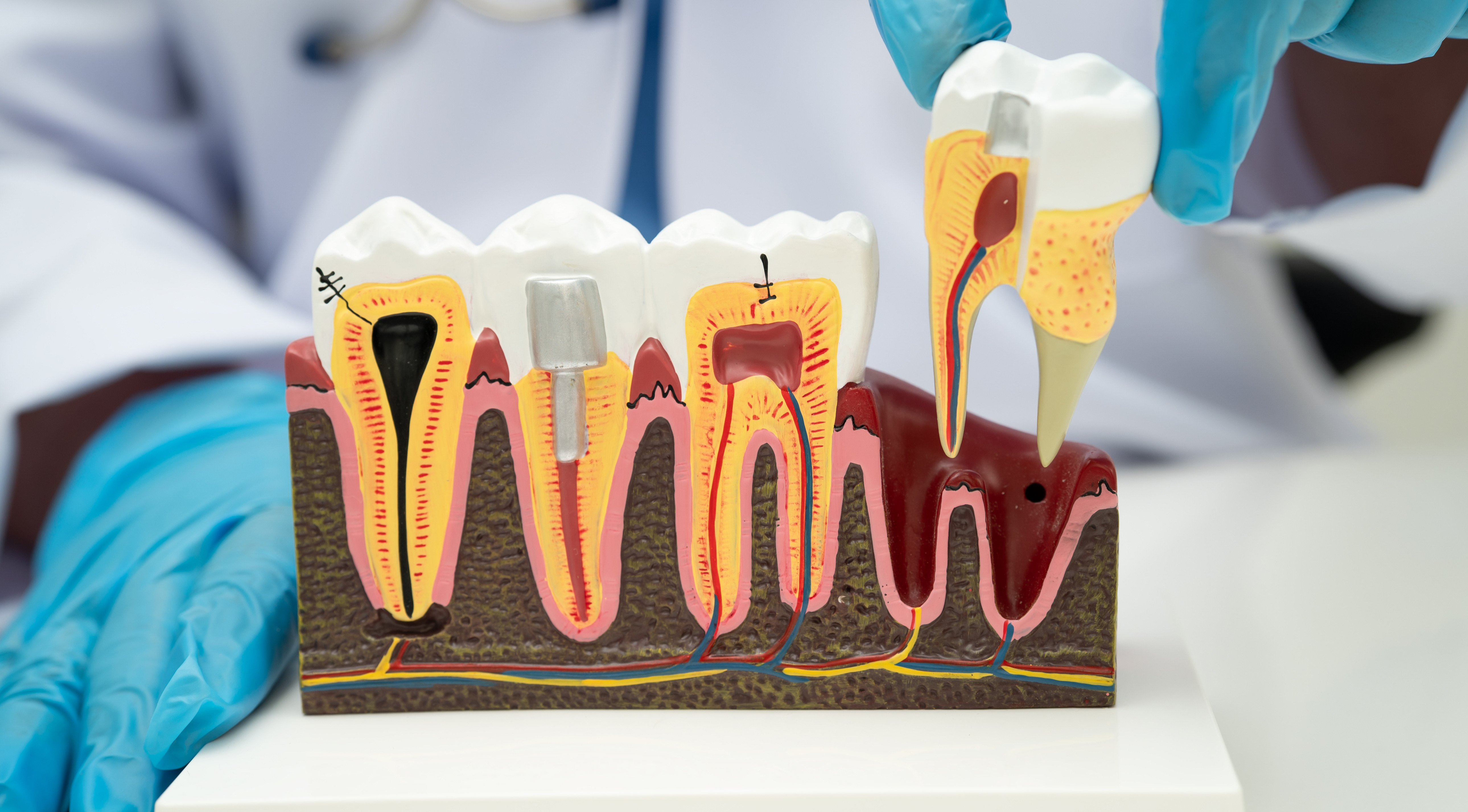
All‑on‑4 works by placing four strategically angled titanium implants into areas of the jaw with strong, existing bone.
Anchoring to a strong foundation requires fewer implants overall.
A custom‑made, fixed arch of prosthetic teeth is then attached to these implants.
The result? A strong, natural‑looking smile that feels and functions much like real teeth. In many cases, a temporary set of teeth can be placed on the same day as the surgery.
This allows you to leave the clinic with a functional smile while the implants fully integrate with the bone over the coming months.
For a full set of replacement teeth, most All‑on‑4 treatments use four titanium screws per arch.
That means four posts in the upper jaw and four in the lower if you’re replacing both arches.
These four implants are strategically placed to support an entire fixed bridge of artificial teeth, giving you a complete smile without needing an implant for every single tooth.
An ideal candidate for All‑on‑4 dental implants is someone who has lost most or all of their teeth in one or both arches and wants a stable, fixed solution rather than traditional dentures.
While you must be over 18 years of age, there is no upper age limit for All-on-4 dental implants. However, you do need to be in good health, and well enough to tolerate the procedure.
You will also need to have sturdy gums and bone density, and be free of gum disease and recession as these can compromise the stability of the implants.
Smokers or those with poor oral hygiene may not be ideal candidates due to the risk of complications.
One of the biggest advantages of All‑on‑4 is that it only requires four titanium screws to support an entire arch of teeth.
This generally means fewer surgical visits and a quicker overall treatment timeline than traditional implants that place individual posts for each tooth.
Many patients also benefit from temporary teeth on the same day as surgery.
Traditional implants remain the gold standard for individual tooth replacements or partial gaps, offering a very natural feel and customisation when only a few teeth are missing.
A thorough assessment with your specialist Wollongong dentist will help determine which option best suits your smile goals, bone health and budget.
Your All‑on‑4 journey begins with a thorough consultation and exam with your dentist.
During this visit, your clinician reviews your medical history, checks your oral health and takes dental imaging (like X‑rays or a 3D scan) to assess your jawbone.
This is where your dentist will choose the best positions for your implant screws.
Before surgery, any necessary preparatory work is done.
This might include extracting damaged teeth, treating gum disease or other dental issues and, in some cases, bone grafting if more bone support is needed.
Your dentist will also guide you on how to prepare for surgery, including fasting instructions, medication checks and arranging transport on the day.
On surgery day, four titanium screws are placed into your jawbone: two near the front and two angled at the back to take advantage of existing bone and avoid areas that might need grafting.
Local anaesthesia (and sedation if chosen) will keep you comfortable during the procedure.
When you get All‑on‑4 implants, your dentist usually fits a temporary bridge first because your jaw and gums need time to heal and adapt after surgery before the permanent teeth are attached.
A temporary bridge gives you immediate function and aesthetics, so you can speak and smile right away while the titanium screws fuse with your jawbone and settle into place.
After surgery, your jawbone begins to fuse with the implanted screws in a process called osseointegration, which will usually take 3 to 6 months.
During this period, bone grows around the screws, strengthening them and securing your foundation for long‑term function.
Regular follow‑up visits help your dentist monitor healing and adjust care as needed.
Once integration is complete and your implants are stable, your dentist fits the final, custom‑made prosthetic arch.
This permanent set of teeth is designed to look natural, fit comfortably and restore full chewing function.
With good oral hygiene and routine dental check‑ups, your All‑on‑4 restoration can deliver years of reliable performance.

We also accept all private health funds and have HICAPS available for instant rebates.
There are many factors that influence the cost of an All-on-4 dental implant treatment, such as how much preparatory work is required and the materials chosen.
However, in Australia there are also variations depending on which state you receive treatment. The following table breaks down approximate costs based on your location.
Our South Coast specialist dentists can give you a more detailed quote, as well as advice on any implant financing available to you.
The below figures are approximations.
Unfortunately, Medicare doesn’t cover dental implant surgery, including All‑on‑4, because dental procedures are generally considered outside the scope of the public health scheme.
This is because dental implants are considered a cosmetic procedure, and Medicare only covers necessary medical treatments.
However, there are some cases where dental implants are deemed necessary.
Private health insurance may help cover part of the cost of All‑on‑4 implants, but this depends entirely on your policy and level of cover.
Many funds classify All‑on‑4 under major dental or implant benefits in extras cover, so you might be able to claim a portion of the implant components, crown work or related procedures.
Every patient is unique, and so is every smile.
That’s why we carefully tailor your treatment to ensure the outcome is uniquely you.
Not only do we restore function and correct bite issues, but we also use Digital Smile Design technology to craft a balanced smile in the ideal shape, colour and size for your facial shape.
As Wollongong locals and providers of the best All-on-4 dental implants, our mission is clear: to bring premium specialist dental care and a first-class patient experience home to our Illawarra community.
At Southern Dental Specialists & Implant Centre, our practitioners are at the top of their field, backed by years of experience, technical skill and the latest tech.
Contact us today to start planning your smile restoration.
View all posts by Dr Arun Thangavel




.jpg)